China Top 10 Solar Curtain Wall Fire Safety Ratings?

Time:2026-10-02 Author:Sienna
0%

What are the fire safety ratings for solar curtain walls? This question requires more than comparing product labels. A solar curtain wall combines photovoltaic modules, glass, aluminum frames, insulation, wiring, and concealed cavities. Each component can influence fire spread, smoke movement, and structural stability.

In China, evaluation may involve reaction-to-fire classifications under GB 8624 and fire-resistance testing for curtain-wall assemblies. Project requirements can also reference GB 50016, GB 55037, or approved laboratory methods. Ratings such as A2, E, EI, and EW describe different performance levels. They do not mean the same thing. A2 mainly concerns limited combustibility, while EI indicates integrity and insulation during a fire test.

Dr. Stephen Kerber, a recognized fire-safety researcher, has stated, “The fire service is the last line of defense, not the first line of defense.” That principle matters here. A compliant solar curtain wall should resist fire before emergency crews arrive. Testing must examine joints, brackets, panel edges, cable penetrations, and cavity barriers. Small gaps can become serious weaknesses.

There is no single universal rating for every solar curtain wall in China. The required level depends on building height, occupancy, façade position, fire compartmentation, and local approval conditions. Some manufacturers present attractive test certificates, but certificates may cover only one configuration. That distinction is easy to miss.

This guide reviews ten leading considerations for China’s solar curtain wall fire safety ratings. It also questions common marketing claims. The evidence should come from complete-system testing, traceable materials, qualified laboratories, and installation records—not appearance alone.
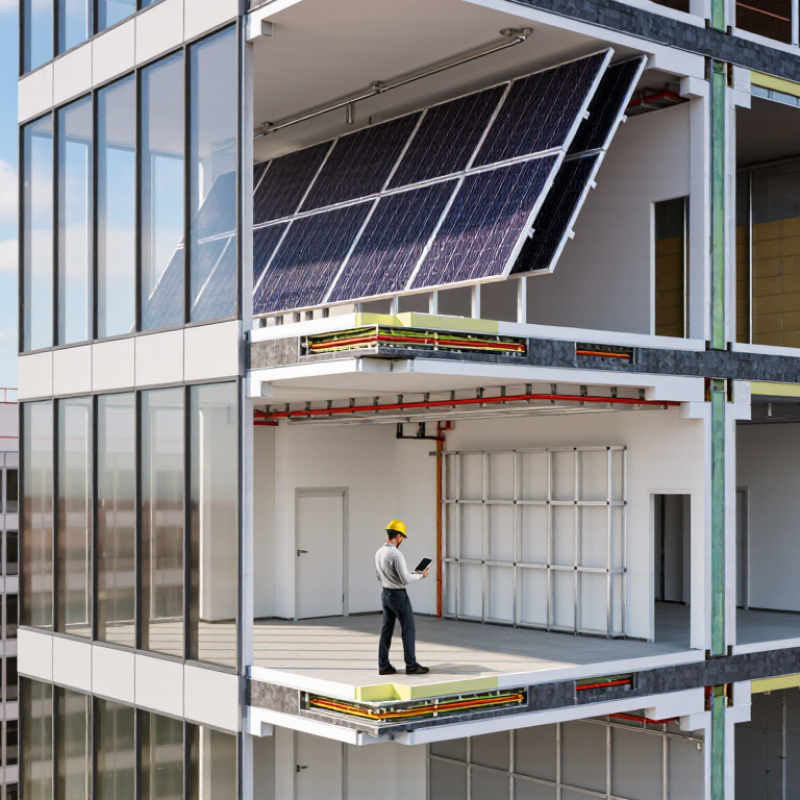
China Top 10 Solar Curtain Wall Fire Safety Ratings?

Defining Solar Curtain Wall Fire Ratings Under China’s GB 8624 Classes

China Top 10 Solar Curtain Wall Fire Safety Ratings?

Solar curtain wall fire performance must be defined through China’s GB 8624 classification system. The main classes are A1, A2, B1, B2, and B3. A1 indicates non-combustible performance. A2 represents limited combustibility. B1, B2, and B3 indicate progressively higher combustion risks. Smoke production and burning droplets may also require additional classifications. These details matter in occupied buildings.

A solar curtain wall is not rated by its photovoltaic glass alone. The tested assembly should include glass, framing, insulation, seals, cables, junction areas, and cavity barriers. Ten practical checks are useful: substrate reaction, insulation type, panel joints, fire stops, drainage paths, cable routing, hidden cavities, impact damage, installation quality, and test scope. A high-performing glass panel cannot correct combustible insulation behind it. Not always.

Project teams should request complete test reports under the applicable GB 8624 method. They should verify specimen thickness, mounting direction, joints, ventilation, and installation conditions. A rating from one component may not represent the finished façade. Site inspections also deserve attention, especially around penetrations and damaged seals. In practice, documentation can look convincing while missing the exact curtain wall configuration. That gap requires professional review by qualified fire engineers and façade specialists before approval.

Applying GB 50016: Façade Fire Separation and Spandrel Requirements

China Top 10 Solar Curtain Wall Fire Safety Ratings?

Under GB 50016, a solar curtain wall is not judged by its photovoltaic module alone. The complete façade assembly matters, including glass, framing, insulation, seals, brackets, and cavity barriers. Fire separation between storeys must limit vertical flame spread. Spandrels at floor edges should provide the required height, continuity, and fire resistance for the building category. Exact dimensions depend on occupancy, height, façade construction, and the applicable code edition.

On site, I would inspect the floor-line barrier before the panels hide it. Mineral-based barriers must remain continuous around anchors, joints, and service penetrations. Small gaps near a mullion can become serious channels for hot smoke. Combustible backing materials also need careful review. They may pass a product test but fail when installed with different joints or fixing methods. The rating belongs to the tested system.

Not just the panel.

Project teams should compare drawings, material certificates, fire-test reports, and installation photographs. GB 50016 should be read with relevant façade and fire-resistance standards, plus local review requirements. A common weakness is treating the spandrel as a decorative strip. It is part of the fire compartment strategy. Another is assuming a successful laboratory test guarantees field performance. It does not. Inspectors should record concealed work before closure, and designers should revisit details that appear “almost compliant.”

China Solar Curtain Wall Fire Safety Ratings under GB 50016

Reference fire-resistance ratings for adjacent structural elements used to determine façade fire separation and spandrel performance.

GB 50016 does not assign a separate fire rating to a solar curtain wall as a complete product. The façade system must maintain the required fire separation at each floor, including sealed slab-to-curtain-wall joints and a fire-resistant spandrel or equivalent fire-resistant glazing. The minimum spandrel height is generally 0.8 m, while the required fire-resistance rating of an alternative fire-resistant glass wall should be no lower than that of the connected floor assembly. Ratings shown are based on the fire-resistance requirements for structural elements in GB 50016 Table 5.1.2 and the curtain-wall separation principles in Article 6.2.5.

Testing BIPV Assemblies Under GB/T 9978 for 30–90-Minute Fire Resistance

China Top 10 Solar Curtain Wall Fire Safety Ratings?

Testing BIPV assemblies under GB/T 9978 requires more than checking the glass panel. The complete curtain wall specimen should include photovoltaic modules, framing, insulation, gaskets, cables, and surrounding joints. During furnace exposure, laboratories observe integrity, insulation, and, where applicable, load-bearing performance. A 30-minute or 90-minute result applies only to the tested assembly and its documented configuration.

Tips: Confirm the test report, specimen drawings, furnace conditions, and failure time. Check cable penetrations closely. They often become the weak detail. Site installers should match tested sealants, fixing distances, backing materials, and module arrangements. Small changes can alter the result. A thicker glass layer does not automatically create a higher fire rating.

Professional review should compare laboratory evidence with the actual façade design. BIPV curtain walls may combine combustible encapsulants, aluminum frames, ventilated cavities, and concealed wiring. These details can change heat movement and smoke pathways. An experienced fire engineer should assess interfaces between floors, spandrels, panels, and adjacent windows. A perfect laboratory result can still hide a weak site detail. That gap deserves honest review. GB/T 9978 testing supports reliable classification, but it does not replace project-specific engineering judgment or careful installation control.

China Top 10 Solar Curtain Wall Fire Safety Ratings? — Testing BIPV Assemblies Under GB/T 9978 for 30–90-Minute Fire Resistance

Reference target matrix for BIPV curtain-wall fire-resistance testing
Rank BIPV Curtain-Wall Assembly Typical Fire-Exposed Zone Primary Fire-Protection Features Target Rating Target Duration Critical Test Observations Applicable Test Reference
1 Unitized BIPV spandrel curtain wall Floor-to-floor spandrel zone Non-combustible mineral-wool back panel, protected perimeter joints, tested fire-stop at slab edge EI 90 90 min Integrity, insulation, joint movement, panel deformation, and temperature rise on the unexposed face GB/T 9978.1; assembly-specific fire test report required
2 Stick-built BIPV spandrel wall Continuous vertical façade bay Mineral-wool infill, fire-rated perimeter seals, mechanically retained glass and panel framing EI 60 60 min Vertical flame spread, seal failure, frame distortion, and heat transfer through the spandrel build-up GB/T 9978.1; façade configuration must be tested as installed
3 Vision-zone BIPV insulating-glass unit Transparent or semi-transparent vision area Fire-resistant glazing build-up, protected edge seals, limited combustible interlayers, restrained framing EI 60 60 min Glass cracking, loss of integrity, radiant heat, interlayer behavior, and frame-to-glass interaction GB/T 9978.1; glazing and frame tested together
4 BIPV curtain wall with opaque fire-rated cassette Opaque façade panel zone Non-combustible cassette, insulated cavity barrier, sealed module perimeter, protected cable route EI 60 60 min Cavity fire spread, panel attachment stability, cable penetration sealing, and unexposed-face temperature GB/T 9978.1; penetration details included in the test specimen
5 BIPV curtain wall with horizontal cavity barrier Compartment line at each floor Continuous mineral-wool cavity barrier, compression-fit perimeter seal, fire-rated slab-edge closure EI 60 60 min Cavity barrier continuity, smoke and flame leakage, slab-edge movement, and façade deflection GB/T 9978.1; movement and joint conditions declared before testing
6 BIPV curtain wall with vertical cavity barriers Mullion and fire-compartment boundaries Non-combustible vertical barriers, sealed mullion cavities, protected fasteners and cable penetrations EI 45 45 min Vertical flame spread, mullion cavity exposure, barrier displacement, and sealant performance GB/T 9978.1; system joints and mullion cavities tested in representative form
7 BIPV curtain wall with ventilated rear cavity Rear-ventilated module façade Compartmented cavity, non-combustible rails, fire-stopping at floor lines, protected junction boxes EI 45 45 min Chimney effect, flame travel behind modules, cavity temperature, and fire-stop continuity GB/T 9978.1; ventilation openings and cavity geometry documented
8 BIPV curtain wall with framed laminated modules Modular replacement façade panels Mechanical module retention, fire-rated perimeter gasket, non-combustible backing and support rails EI 30 30 min Module retention, glass fallout, edge-seal failure, flame penetration, and heat transmission GB/T 9978.1; module mounting and replacement joints included
9 BIPV curtain wall with translucent composite panels Daylighting or atrium façade zones Fire-resistant translucent layer, protected frame cavity, limited combustible content, compartment seals EI 30 30 min Panel softening, smoke leakage, delamination, frame stability, and radiant heat transfer GB/T 9978.1; material composition and panel orientation recorded
10 BIPV curtain wall with service penetrations Areas containing DC cables and junction boxes Certified fire-stop systems, sealed cable sleeves, protected junction boxes, separated service cavity EI 30 30 min Cable insulation ignition, penetration leakage, fire-stop failure, smoke migration, and electrical enclosure integrity GB/T 9978.1; all service penetrations tested in their installed configuration
Technical note: EI 30, EI 45, EI 60, and EI 90 are target fire-resistance classifications expressed by integrity and insulation duration. The values above are reference design targets, not claims that any particular product or assembly has been certified. Actual compliance requires testing of the complete installed BIPV curtain-wall assembly, including modules, frames, backing panels, cavity barriers, joints, fasteners, cable routes, and penetrations, in accordance with the applicable edition of GB/T 9978 and project requirements.

Scoring China’s Top 10 Systems by Fire Class, Smoke, Droplets, and Test Data

China’s top ten solar curtain wall systems should be judged as complete assemblies, not isolated photovoltaic panels.

Our scoring model assigns 40 points to fire class, 20 to smoke production, 15 to flaming droplets, and 25 to verified test data. Fire classes should follow recognized systems such as GB 8624 or EN 13501-1. An A1 or A2 rating generally indicates stronger non-combustibility performance, but installation details still matter.

Smoke results need close inspection. Lower smoke classes, such as s1, support safer evacuation conditions than s2 or s3.

Droplet performance also deserves attention. A d0 result shows no persistent flaming droplets during the test, while d1 and d2 indicate increasing concern.

Cables, sealants, insulation, and ventilation gaps can change the outcome. The panel alone tells only part of the story.

Reliable systems should provide full-assembly reports, laboratory accreditation, test dates, specimen drawings, and failure observations. A small-scale sample may not represent a tall façade exposed to wind and vertical fire spread. That is where many comparisons become weak. One imperfect point remains: numerical scores can make complex fire behavior look simple. Reviewers should inspect the original data, repeat critical checks, and separate laboratory performance from site workmanship. Missing documents should reduce confidence, even when the product appears technically advanced.

Verifying Fire Certificates Against IEC 61730 and Chinese Product Standards

China Top 10 Solar Curtain Wall Fire Safety Ratings?

Fire certificates for solar curtain walls need careful verification, not simple ranking. IEC 61730 evaluates photovoltaic module safety, including electrical insulation, mechanical stress, and construction risks. It does not independently certify the fire resistance of a complete curtain wall assembly.

Check the certificate number, issuing laboratory, tested model, production site, and applicable standard edition. Compare the certificate with the installed module, glass, frame, sealant, and cable arrangement. A small material change can affect the result. That detail is often missed.

Chinese projects may also require evidence under relevant product and building standards, such as reaction-to-fire classifications, fire-resistance tests, and curtain wall separation requirements. The correct standard depends on building height, use, facade design, and local approval conditions.

Ask for the complete test report, not only a certificate cover page. Review specimen drawings, furnace exposure time, failure criteria, and installation limitations.

Check the laboratory’s accreditation and confirm the certificate through an official database or issuing body.

Dates matter. Standards and product configurations change.

A certificate may be genuine but insufficient.

In practice, reviewers should trace every fire claim back to the tested assembly. The module alone cannot represent the entire facade.

Some records remain unclear, especially when imported components are combined with locally fabricated frames. That uncertainty deserves written clarification before procurement or approval.

FAQS

What should a fire review assess in a solar curtain wall?

Assess the complete façade assembly, including glass, frames, insulation, seals, brackets, and cavity barriers. Not just the panel.

Why are floor-line barriers important?

They limit vertical flame and smoke spread between storeys. A small gap beside a mullion can channel hot smoke upward. Tiny gaps matter.

What should inspectors check before panels cover concealed barriers?

Inspect mineral-based barriers around anchors, joints, and service penetrations. Record photographs before closure. Hidden work becomes difficult to verify later.

Can a photovoltaic module certificate prove complete façade fire resistance?

No. It may evaluate module insulation, construction, and mechanical safety. It does not certify the entire curtain wall assembly. A certificate may be genuine but insufficient.

Which certificate details require verification?

Check the certificate number, testing laboratory, model, production site, and standard edition. Confirm that the installed components match the tested configuration.

Why might laboratory results differ from site performance?

Tests use specific joints, fixings, materials, and installation methods. Site changes can alter fire behaviour. The rating belongs to the tested system.

Which project documents should teams compare?

Compare drawings, material certificates, complete test reports, specimen details, and installation photographs. Review furnace exposure, failure criteria, and installation limits. Paperwork helps.

What common mistakes weaken façade fire compliance?

Teams may treat the spandrel as decoration or trust a successful laboratory test too much. Mixed imported and local components create uncertainty. “Almost compliant” needs review.

Conclusion

This article explains how solar curtain wall fire performance is evaluated in China, beginning with the GB 8624 classification system for reaction-to-fire behavior. It also examines how GB 50016 addresses façade fire separation, vertical and horizontal fire barriers, and spandrel design to help limit flame spread between building levels. A central question is: What are the fire safety ratings for solar curtain walls? The answer depends on the complete BIPV assembly, including glass, cells, framing, sealants, insulation, and installation details.

The article further describes fire-resistance testing under GB/T 9978, including 30-, 60-, and 90-minute performance targets where applicable. It proposes a practical method for comparing China’s top ten solar curtain wall systems by fire class, smoke production, flaming droplets, structural integrity, and the quality of supporting test data. Finally, it outlines how to verify fire certificates and technical documentation against IEC 61730 and relevant Chinese product standards, emphasizing that project-specific testing and certified installation are essential for reliable compliance.

Sienna

Sienna

Sienna is a skilled marketing professional with a deep expertise in our company’s core products and services. With a passion for innovation and detail, she plays a pivotal role in crafting insightful blog posts that not only highlight the unique features of our offerings but also provide valuable......