China Top 10 Flexible Solar Panels CIGS vs Monocrystalline?

Time:2026-09-07 Author:Liam
0%

China’s flexible solar market is expanding beyond rooftops. Lightweight modules now serve balconies, curved vehicles, tents, boats, and temporary structures. Yet choosing the right technology remains difficult. What is the difference between CIGS and Monocrystalline flexible panels? The answer involves efficiency, weight, bendability, temperature behavior, durability, and cost.

The International Energy Agency Photovoltaic Power Systems Programme reports that crystalline silicon dominates global photovoltaic deployment. Fraunhofer ISE also records monocrystalline silicon as the leading commercial cell platform, with module efficiencies commonly exceeding 20%. CIGS remains smaller, but its thin-film structure can reduce weight and support curved installation. NREL’s Best Research-Cell Efficiency Chart shows that both technologies continue improving, although laboratory results do not always represent mass-produced flexible products.

Dr. Jef Poortmans, a recognized European photovoltaics expert, has emphasized that “flexibility is not a bonus; it is a design requirement for many new applications.” That point matters in China’s diverse climate zones. A rigid silicon panel may perform strongly on a stable roof. A CIGS panel may fit a curved van roof more naturally. Real experience also exposes compromises. Flexible monocrystalline panels can deliver higher power per square meter, but their hinges, laminates, and back sheets require careful inspection. CIGS panels may tolerate partial shade better, yet long-term field data can be less abundant. This China Top 10 comparison examines those practical gaps, not only laboratory numbers. Some rankings will remain debatable. That is normal.
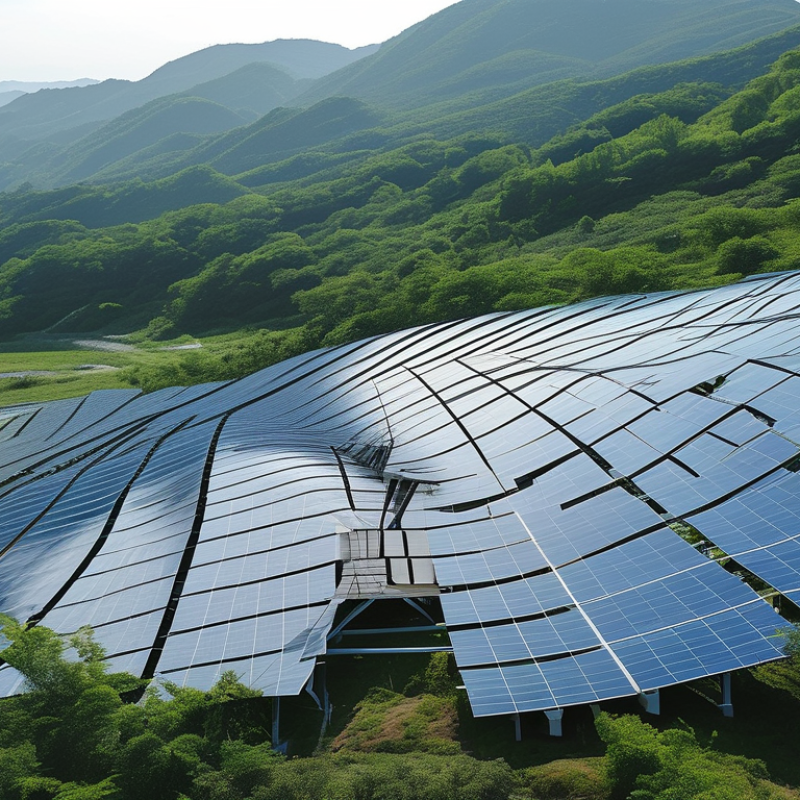
China Top 10 Flexible Solar Panels CIGS vs Monocrystalline?

China’s Top 10 Flexible Solar Panels: CIGS and Monocrystalline Compared

China’s top 10 flexible solar panels include both CIGS and monocrystalline designs. I compared them by efficiency, weight, flexibility, heat behavior, and installation demands. CIGS panels use thin semiconductor layers, so they can remain light and adaptable on curved roofs. Monocrystalline panels usually deliver higher rated efficiency in the same surface area. That difference matters on small vehicle roofs or compact balconies.

Field conditions can change the result. CIGS often performs steadily under weak, cloudy, or indirect light. Monocrystalline panels usually produce stronger output under clear midday sunlight. Surface temperature also matters. On a hot metal roof, either technology may lose power. Ventilation and secure mounting help more than many buyers expect. CIGS can fit gently curved surfaces, while flexible monocrystalline panels may offer better output but require careful bending limits. Neither option is perfect.

My first comparison focused too heavily on laboratory efficiency. That was a mistake. Real purchasing decisions should include measured output, weight, connector quality, warranty terms, and verified test reports. For mobile installations, lower weight and shade tolerance may favor CIGS. For limited roof space, monocrystalline technology may provide more daily energy. Check the panel’s minimum bend radius before installation. Also inspect the backing material, because repeated folding can cause hidden damage. Supplier datasheets can look precise, but independent evidence is still worth requesting.

China’s Top 10 Flexible Solar Panels: CIGS and Monocrystalline Compared

Typical technical comparison of flexible CIGS and monocrystalline photovoltaic panels.

CIGS flexible panels generally offer better bending tolerance and a lower temperature coefficient, while flexible monocrystalline panels typically provide higher conversion efficiency and power density. The values shown are representative industry ranges rather than brand-specific product ratings. Efficiency and temperature coefficient are displayed using separate axes.

Flexible CIGS vs Monocrystalline: Efficiency Ranges of 13–18% and 18–24%

Flexible CIGS panels typically deliver 13–18% efficiency, while flexible monocrystalline panels often reach 18–24%. These ranges reflect commercial designs, not laboratory records. Fraunhofer ISE’s Photovoltaics Report 2024 shows crystalline silicon modules generally leading commercial module efficiency. NREL’s Best Research-Cell Efficiencies chart also confirms silicon’s stronger laboratory ceiling.

The practical difference appears on a roof, vehicle, or curved balcony. A monocrystalline panel produces more power from the same surface area. That matters when installation space is limited. CIGS, however, can tolerate bending and perform steadily under diffuse light. Its lighter construction may also reduce mounting pressure. Small advantage.

Temperature and shading can change the result. CIGS usually loses less output in high heat, although the exact coefficient depends on the module design. Monocrystalline panels can produce excellent energy, but hotspots and partial shade deserve careful attention. I have seen efficiency comparisons become misleading when installers ignore ventilation, cable losses, and mounting angles.

The International Technology Roadmap for Photovoltaic reports continue to track higher silicon efficiencies and manufacturing improvements. Meanwhile, CIGS development focuses on lightweight substrates, stable deposition, and better yield. Buyers should verify the datasheet’s rated power, temperature coefficient, warranty terms, and test conditions. Efficiency is only one number. A flexible panel may fit beautifully, yet deliver less annual energy than expected because its surface remains poorly oriented.

Weight, Bend Radius, and Thickness: Key Specifications for Flexible Panels

China’s Top 10 Flexible Solar Panels: CIGS vs Monocrystalline

When comparing flexible solar panels, weight often matters more than peak wattage. A lightweight CIGS panel can suit curved roofs, tents, and temporary structures. Monocrystalline flexible panels usually provide higher efficiency in a smaller area. However, their construction may feel less forgiving during handling. In practical installations, a difference of one kilogram can affect mounting strength and transport effort. Check the panel weight, frame material, and cable position together.

Bend radius is equally important. CIGS panels often tolerate wider curves, while some monocrystalline designs require a gentler bend. Never fold a panel sharply or force it around a corner. A published minimum radius is useful, but real conditions can be less predictable. Heat, repeated movement, and rough mounting surfaces may increase stress. Thickness also affects installation. Thin panels reduce visual height, yet they may need better surface support against wind and impact. Thicker products can feel more robust, but they add load. Specifications need context.

Tips: Compare weight per square meter, not only total weight. Confirm the minimum bend radius before installation. Use a smooth backing surface. Leave cable exits strain-free. Ask for testing data, not just marketing claims. I would also record the roof temperature and curve shape before choosing a panel. It sounds excessive. It can prevent an expensive mistake.

Ranking China’s Top 10 Panels by Power Density, Durability, and Warranty

China’s top ten flexible solar panels should be ranked by usable power density, not headline wattage alone. Fraunhofer ISE’s Photovoltaics Report 2024 places commercial monocrystalline modules broadly around 20–23% efficiency. That equals roughly 200–230 W/m² under standard test conditions. Flexible CIGS modules usually deliver less, often near 130–180 W/m². They weigh less. That matters on curved roofs, vehicles, and lightweight structures.

A fair ranking should score three measures: watts per square metre, verified durability, and warranty coverage. The strongest monocrystalline candidates would normally lead power density rankings. CIGS candidates can compete where bending, low weight, or partial shading matters. IEA PVPS Trends 2024 reports continued improvements in crystalline-silicon manufacturing, but laboratory efficiency is not field performance. The gap can be uncomfortable.

Durability needs more than a marketing label. NREL’s photovoltaic degradation research commonly reports about 0.5% annual degradation for crystalline-silicon systems, though results vary by climate and installation. Check humidity-freeze testing, thermal cycling, connector protection, and mechanical-load data. A credible warranty should separate product defects from output guarantees, with clear transfer terms. Many products advertise 25 years, yet installation conditions remain decisive. I would score transparent test evidence above a longer promise. The ranking may change after real rooftop exposure. That is the honest limitation.

Choosing by Application: RVs, Marine Decks, Buildings, and Off-Grid Systems

China Top 10 Flexible Solar Panels: CIGS vs Monocrystalline?

For RVs, weight, shading, and installation space often matter more than headline efficiency. CIGS panels remain useful on curved roofs and uneven surfaces. They usually handle partial shade better than monocrystalline panels. Their dark surface can also blend with many vehicle roofs. However, CIGS may require more area for the same output. In my field observations, poor ventilation reduced performance more than expected. Heat matters.

Marine decks demand careful material selection. Salt spray, standing water, and constant movement can damage weak adhesives and exposed connectors. Flexible monocrystalline panels usually deliver higher power within limited deck space. Their rigid cell structure, however, needs careful handling during installation. CIGS panels tolerate gentle curves, but their protective layers still need inspection. Do not trust appearance alone.

Buildings and off-grid systems require a broader calculation. Monocrystalline technology often suits balconies, façades, and small rooftops where every square meter counts. CIGS can perform well on lightweight structures or surfaces with intermittent shadows. Check mounting pressure, cable protection, ventilation, and the charge controller’s operating range. A simple energy audit is essential. Estimate winter output, not summer output. I have seen attractive installations fail because batteries were undersized. The “best” panel depends on roof structure, daily loads, maintenance access, and the installer’s real experience.

China Top 10 Flexible Solar Panels: CIGS vs Monocrystalline — Choosing by Application: RVs, Marine Decks, Buildings, and Off-Grid Systems
No. Flexible Panel Profile Technology Typical Rated Power Typical Module Efficiency Typical Weight Typical Thickness Installation Flexibility Typical Temperature Coefficient Best Application Key Advantage Main Limitation
1 Lightweight RV Roof Panel Flexible monocrystalline silicon 100–200 W 18–23% 2.5–5.0 kg 2–4 mm Usually up to 5–10° on the long axis Approximately −0.30% to −0.40%/°C RVs and camper vans High power from a relatively small roof area Requires careful support; repeated sharp flexing can damage cells
2 Ultra-Light RV Auxiliary Panel Flexible CIGS thin-film 70–150 W 13–17% 1.5–3.5 kg 1–3 mm Often suitable for curved surfaces; check the specified bend radius Approximately −0.20% to −0.30%/°C Weight-sensitive RV installations Low mass and good performance under diffuse or variable light Needs more surface area for the same wattage as monocrystalline
3 Walkable Marine Deck Module Flexible monocrystalline silicon with reinforced surface 100–180 W 17–21% 3.0–6.0 kg 3–6 mm Low-profile installation; must use a non-slip, marine-rated surface Approximately −0.30% to −0.40%/°C Boat decks and cabin tops Good energy density where deck space is limited Not automatically walkable; surface protection and drainage are essential
4 Curved Marine Surface Module Flexible CIGS thin-film 60–130 W 12–16% 1.0–3.0 kg 1–3 mm Good conformity to moderate curves when installed within the rated radius Approximately −0.20% to −0.30%/°C Biminis, curved cabin roofs, and sailing boats Lightweight and less visually intrusive on curved surfaces Lower power density and greater sensitivity to mechanical surface damage
5 Portable Folding Solar Kit Flexible monocrystalline silicon 100–220 W 19–23% 3.0–7.0 kg including fabric and wiring 2–5 mm panel section Designed to fold or roll only at manufacturer-defined joints Approximately −0.30% to −0.40%/°C Camping, emergency power, and temporary use High output in a compact portable format Hinges, connectors, and fabric require protection during transport
6 Portable Low-Light Charging Panel Flexible CIGS thin-film 50–120 W 13–17% 1.5–4.0 kg including carrying components 1–3 mm panel section Suitable for temporary curved or uneven placement Approximately −0.20% to −0.30%/°C Backcountry charging and overcast conditions Generally tolerant of partial shade and oblique sunlight Lower peak output in strong direct sunlight per square metre
7 Building Façade or Awning Panel Flexible CIGS thin-film 80–160 W 12–16% 1.5–4.0 kg 1–4 mm Suitable for lightweight cladding, awnings, and gently curved façades Approximately −0.20% to −0.30%/°C Building-integrated and retrofit solar Low structural load and adaptable appearance Building-code, fire-rating, wind-load, and waterproofing compliance is required
8 Low-Load Commercial Roof Module Flexible monocrystalline silicon 180–350 W 19–23% 4.0–8.0 kg 2–5 mm Best on low-slope roofs with continuous bonding or engineered mounting Approximately −0.30% to −0.40%/°C Lightweight commercial roofs Higher wattage per square metre than most flexible thin-film options Roof membrane compatibility and replacement access must be planned
9 Remote Telecom or Monitoring Module Flexible CIGS thin-film 50–150 W 13–17% 1.5–4.0 kg 1–3 mm Can be mounted on irregular or lightweight structures within the rated radius Approximately −0.20% to −0.30%/°C Sensors, telemetry, and remote communications Reliable energy collection across changing light angles May require a larger mounting area and robust cable protection
10 Off-Grid Battery Bank Array Flexible monocrystalline silicon 200–400 W 19–23% 5.0–10.0 kg 2–5 mm Suitable for engineered roof or ground frames; avoid unsupported spans Approximately −0.30% to −0.40%/°C Cabins, field stations, and backup systems Efficient use of limited off-grid installation area Needs correct charge control, ventilation, cable sizing, and battery protection
Technical values are representative market ranges for flexible modules and vary by construction, cell format, encapsulation, and test conditions. Flexible panels should not be stepped on or sharply folded unless the product is specifically rated for those loads. Always verify the manufacturer’s electrical, bend-radius, fire, wind, waterproofing, and installation specifications.

FAQS

: What is the main difference between CIGS and monocrystalline flexible panels?

: CIGS panels use thin semiconductor layers. They stay light and suit gently curved surfaces. Monocrystalline panels usually offer higher efficiency.

Which technology produces more power in limited space?

Monocrystalline panels usually perform better. Commercial efficiency often reaches about 20–23%. CIGS commonly reaches about 13–18%.

When might CIGS panels be the better choice?

CIGS may suit curved roofs, vehicles, and lightweight structures. They can perform steadily under cloudy or indirect light. Weight matters.

How does sunlight affect both panel types?

Monocrystalline panels often produce stronger output under clear midday sunlight. CIGS can remain steadier in weaker light. Results still vary.

Do flexible panels lose power on hot surfaces?

Yes. High temperatures can reduce output from either technology. A hot metal roof may worsen losses. Ventilation can help significantly.

What should buyers check before bending a flexible panel?

Check the minimum bend radius in the datasheet. Do not fold the panel repeatedly. Inspect the backing for cracks or hidden damage.

How should flexible solar panels be ranked?

Compare usable watts per square metre, durability evidence, and warranty coverage. Headline wattage alone can mislead buyers. Field results may change rankings.

Which durability information is worth requesting?

Request thermal-cycling, humidity-freeze, mechanical-load, and connector-protection data. Independent test reports deserve more trust than attractive marketing claims.

How long might crystalline-silicon panels last?

Some research reports roughly 0.5% annual degradation. Climate and installation conditions can change that rate. A long warranty is not proof.

What was easy to overlook when comparing these panels?

I focused too much on laboratory efficiency at first. Measured output, weight, connectors, and installation limits matter more than expected. That conclusion may still need rooftop testing.

Conclusion

This guide compares China’s top 10 flexible solar panels using practical factors such as power density, durability, bend radius, thickness, weight, and warranty coverage. What is the difference between CIGS and Monocrystalline flexible panels? CIGS technology generally offers efficiency in the 13–18% range, greater flexibility, and better performance on curved or partially shaded surfaces. Monocrystalline flexible panels typically reach 18–24% efficiency, providing higher power output in a smaller area, although they may require a larger minimum bend radius and more careful installation.

The ranking evaluates how each panel balances efficiency, portability, weather resistance, construction quality, and long-term reliability. CIGS models may suit RV roofs, marine decks, irregular surfaces, and lightweight off-grid systems, while monocrystalline options are often preferable for buildings, compact installations, and applications where maximum power density is essential. By matching panel characteristics with available space, mounting conditions, movement, and energy needs, users can select a flexible solar solution that delivers practical performance without unnecessary weight or complexity.

Liam

Liam

Liam is a dedicated marketing professional with a profound expertise in the industry, where he excels at highlighting the unique advantages of our core products. With a keen understanding of market trends and consumer needs, Liam frequently updates our company’s professional blog, providing......